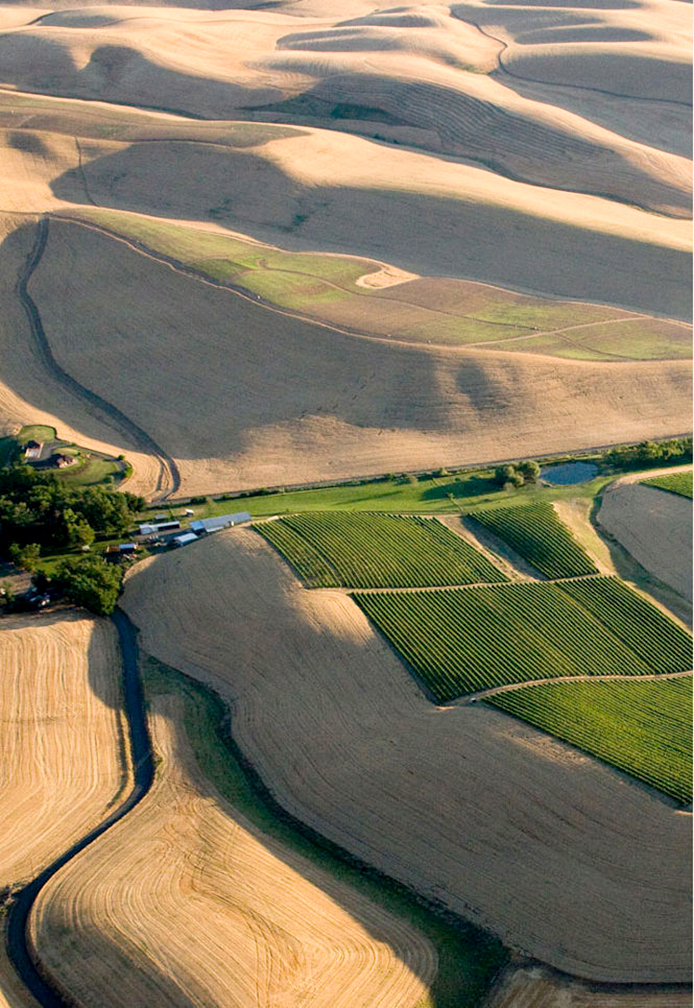
Engaging celebration of Cab Franc. Robust and rich with a bewitching mélange of ripe fruits that will bring pleasure to dark-fruit-wine aficionados, especially after the wine enjoys exposure to some air. It also is a window into a saga of grit and hardscrabble survival in the volcanic basalt and wind-whipped loess of eastern Washington State. $65-70

The grapes are 100% estate-grown at the family’s ranch northeast of Walla Walla—Spring Valley Vineyard only makes wine from family-owned vineyards. The grapes fermented 12-14 days in stainless steel, basket-pressed, then transferred to French oak for malolactic conversion and aged 19 months in the barrels. This is a serious, age-worthy wine. It is drinking well now and is likely to improve over the next decade.
Spring Valley Vineyard’s story is a great American chronicle of setbacks, comebacks, and perseverance. In 1865, Francis Marion Corkrum, his wife, Mary Jane Killebrew Corkrum, and their children crossed the country by wagon train from Illinois and homesteaded in the Walla Walla Valley, Washington Territory. The family built a cabin on Spring Branch. Their fifth child, Uriah, was born the following year.
Uriah eventually secured land of his own and married Ida May. Ida May and her fourth child died in childbirth in 1893. Adding to the misery, heavy rains caused Uriah to lose his crop and the Panic of 1893 cost him his land that doleful year. But Uriah was resilient and began working a ranch at Spring Valley in 1897. That same year, Katherine Williams arrived in the Walla Walla Valley from Wales to visit her brother, David, who was married to Uriah’s sister. The stage was set for the next romantic chapter. Katherine and widower Uriah married in December 1897. They had four sons. This wine is named for Katherine.
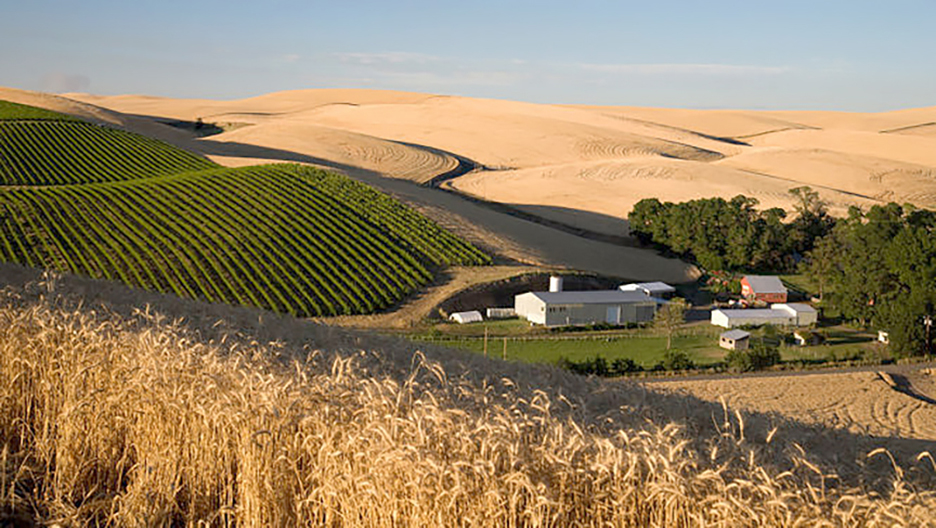
The saga continues. Nina Lee Moore arrived in Walla Walla as a two-year-old in 1900, the same year Uriah and Katherine’s son, Frederick, was born. Frederick worked as the muleskinner on the family farm; he also quarterbacked the Whitman College football team. Frederick and Nina Lee fell in love, married, and moved to the Spring Valley ranch in 1929, just at the start of the Great Depression.
With tenacity, Nina Lee and Frederick kept the ranch, mainly growing wheat. Their daughter, Shari Corkrum, was born in 1934. Shari met Dean Derby in the sixth grade; they graduated high school together and attended the University of Washington in Seattle. They married in 1954. Dean was a football star who played in the NFL for the Steelers and Vikings. Their son, Devin, was born in 1956.
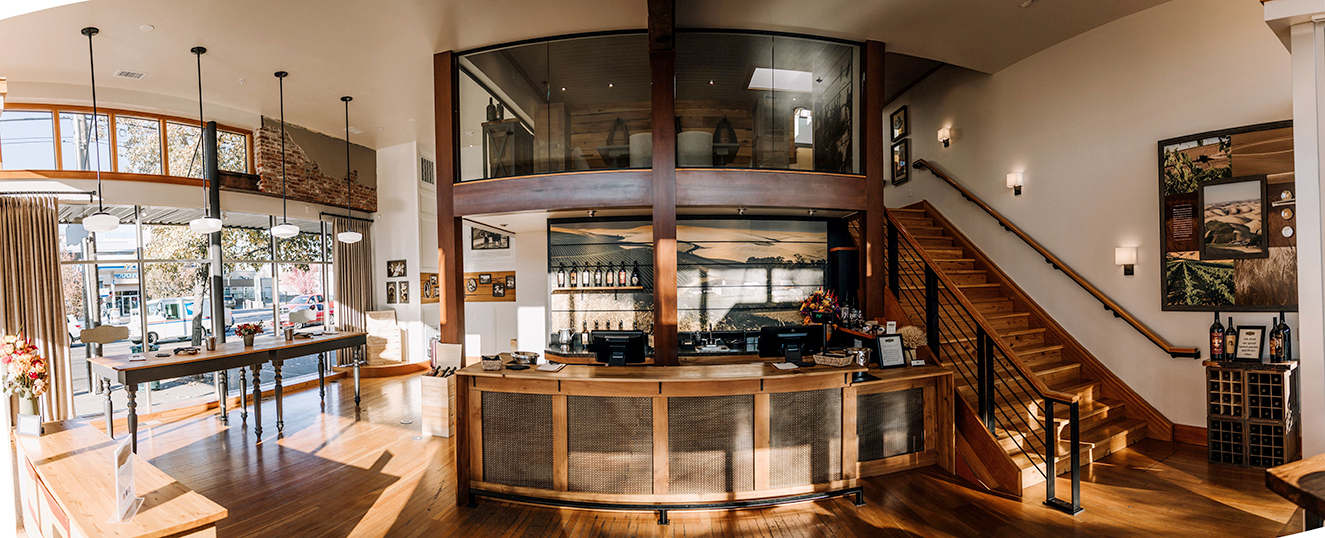
In 1993, Dean and Shari planted wine grapes on the ranch in Spring Valley to supplement their wheat operation. The grapes were a success, and in 1999, son Devin moved back to the family ranch to establish a winery. Devin produced his first crush in 1999, followed by a succession of labels. The Corkrum-Derby family is no stranger to heartache, and in 2004 Devin was killed in a car wreck. The following year, Ste. Michelle Wine Estates purchased the brand and secured a long-term lease of the land and winery. The Corkrum-Derby family retained the land.
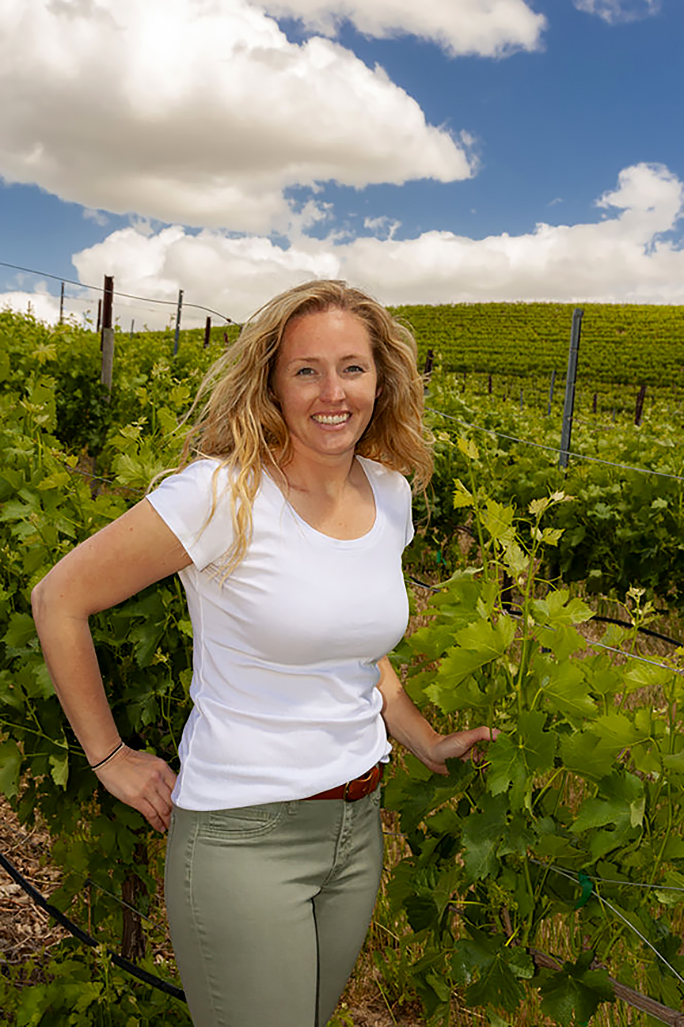
Devin’s niece, Katherine (Kate) Derby, began working at the winery in 2006, a year after the sale to Ste. Michelle. The family planted additional acres and opened a new tasting room in 2007, the same year Kate’s son, Uriah Royal, was born, adding a seventh generation to the family legacy. In 2009, the winery released its Katherine Corkrum Cabernet Franc (2007 vintage). In 2011, Kate joined the winemaking team. In 2021, Dean Derby passed. In 2023, Kate was named head winemaker; she was part of the winemaking team for this vintage. Ste. Michelle Wine Estates provides production infrastructure and distribution, but a Corkrum-Derby still makes the wine.
Spring Valley Vineyard Katherine Corkrum Cabernet Franc, Walla Walla Valley, Washington 2022: Deep ruby color; blackberry, raspberry, black cherry, bell pepper, blackcurrant, tobacco, chocolate on the nose and palate. 14.5% ABV
Dry; silky tannins; medium acidity (3.83 pH; 5.7 g/L TA). Medium-plus body; savory mouthfeel; smooth palate pleaser, especially after some time in your glass. Consider decanting to allow elements to knit together and to leave behind the sediment that can accumulate in this wine.
Pairing—Herbed-roasted lamb; filet mignon; grilled beef tenderloin; grilled flat iron steak; braised short ribs; beef bourguignon; herb-roasted pork tenderloin; barbecued pork ribs; duck breast with cherry; ratatouille or peppers stuffed with beef and rice; wild mushroom and lentil ragù. Cheese—Aged Gruyère, aged Manchego, Comté, five-year-old Gouda; fresh goat cheese can work, but aged cow’s milk is the safe play.
Spring Valley Vineyard website