Simi Alexander Valley Cabernet Sauvignon 2012: Nice enough effort; expected soft tannin and greenness of Alexander Valley red; plenty of cherry, berry, some black currant tang on the tongue, somewhat restrained oak; scores points for creaminess, smoothness, spice on the finish; fruit-forward, but lacks balance and falls short of overall wonder for the price. It you enjoy big fruit-oak a’plenty Cal cabs, give this a shot to see if you disagree with my evaluation. Certainly not terrible, but not compelling joy either. Alas. $21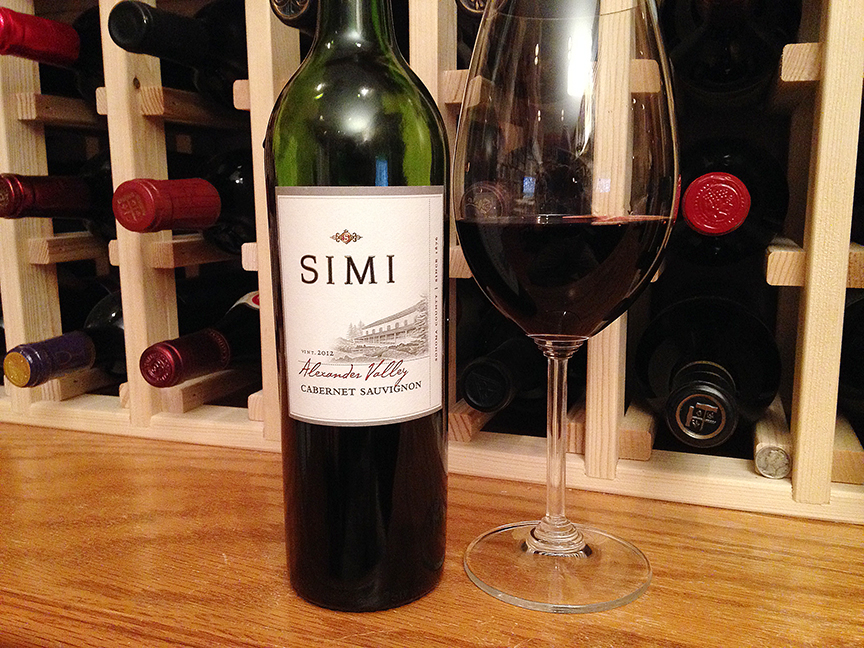
Category: Tasting Notes
Becker Vineyards Chardonnay 2013
Becker Vineyards Chardonnay 2013: Value-focused chard; rich, plenty of oak and buttery softness on the palate, balanced with acidity; oranges, lemon-lime; whiff of thyme or lavender herbaceousness on the nose; easy drinker, simple, full flavored if somewhat one-dimensional. Becker makes this at its beautiful winery-tasting room-shop in Stonewall; the venue is a must-visit on the Texas Wine Trail in the Hill Country. It almost certainly is made with out-of-state grapes; the “For Sale in Texas Only” on the label is the tell; in one of the quirks of our country’s ridiculous mess of wine/alcohol laws and rules, you don’t have to tell consumers the source of your grapes if you don’t sell outside your state. If this had been made with Texas-grown grapes, Becker would brag about it. Likely, this juice comes from California’s Central Valley, but that’s just informed guess. The pleasant pour is at least made in Texas (the juice got here as quick as it could). $9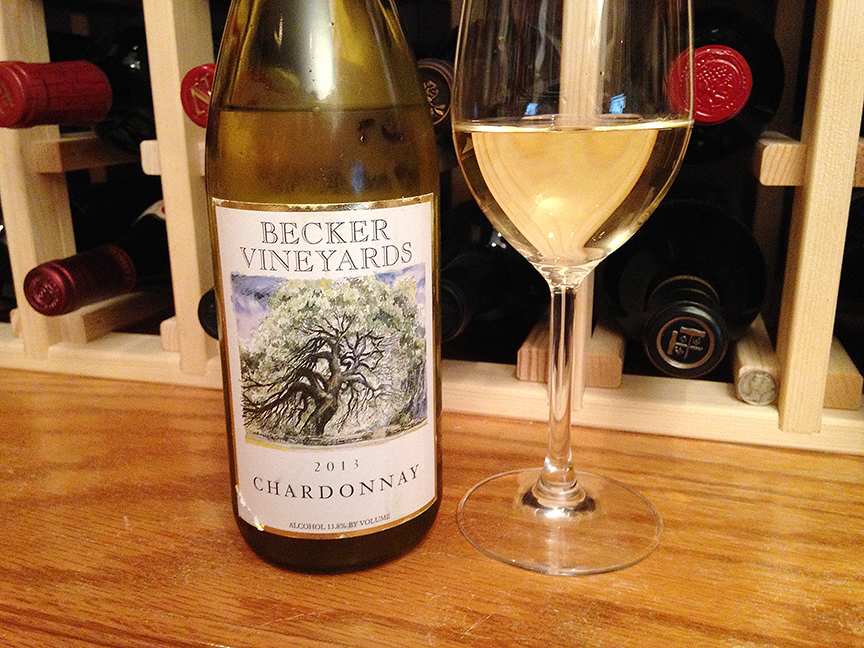
Vina Robles Cabernet Sauvignon 2012
Vina Robles Cabernet Sauvignon 2012: Excellent Paso Robles effort made with satisfying restraint; big, juicy fruit, blackberries, plum, black cherry, blueberry, vanilla; creamy mouth with structure and complexity for the price. Cab aged mainly in French oak, but some in American and Hungarian oak, for eight months, then petit verdot and tannat were added for structure and freshness. Final blend aged an additional year in oak to integrate the flavors. In spite of 20 months in various oaks, this remarkably is not frightening oak monster. Vina Robles cabs regularly score very well, and this carries on the tradition and exhibits skill in blending and use of oak. It is medium-full bodied, modest alcohol (13.7%) for Cal cab, balanced, good acidity and well-behaved tannin, a tasty change of pace from massive Napa cabs. Paso Robles is rising star wine growing area at southern end of California Central Coast region; at some 666,500 acres, it is one of California’s largest regions, covering northern half of San Luis Obispo County. It consistently produces rich, ripe reds from warm-climate grape varieties. This smoothly delicious effort is clearly worth a cork-pull on your wine bucket list. $21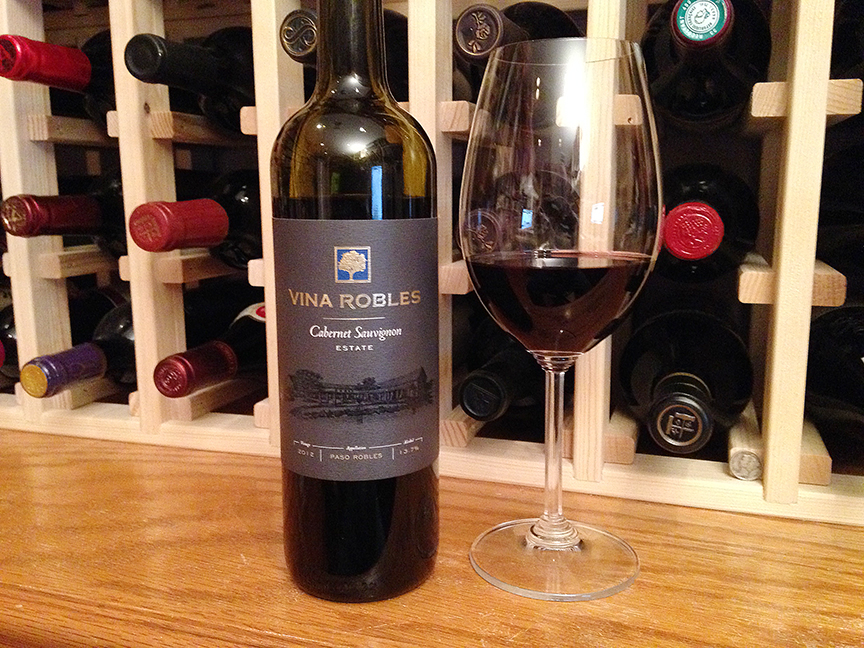
Kim Crawford Unoaked Chardonnay 2014
Kim Crawford Unoaked Chardonnay 2014: Light straw color, lilt of grapefruit on the nose; peach, lemon meringue, tropic fruit, pinch of pineapple on the palate; crisp, light and creamy, medium texture, nice acidity, some complexity from five months of aging on the lees, but a simple, straightforward chard at its core. With no oak, you get a pure east coast of New Zealand (Marlborough and Hawke’s Bay fruit) chard with this pour. Kim Crawford is one of the NZ standard bearers in world-wide wine; it started making wine in 1996, and unoaked chardonnay was the first bottling. The chardonnay grape is extremely versatile and can be made in let-the-fruit-speak-for-itself style such as this, or as tricked-up oak-and-butter monsters that soared in popularity in the1980s. Chardonnay is the world’s second-most planted white wine grape, behind only Spain’s airén—and that only if you measure by acreage (airén vines are much more widely spaced). Oak can be used like pancake makeup to trowel over flaws; unoaked gives you chard pure and simple. This is clean, fresh, charmingly guileless. $16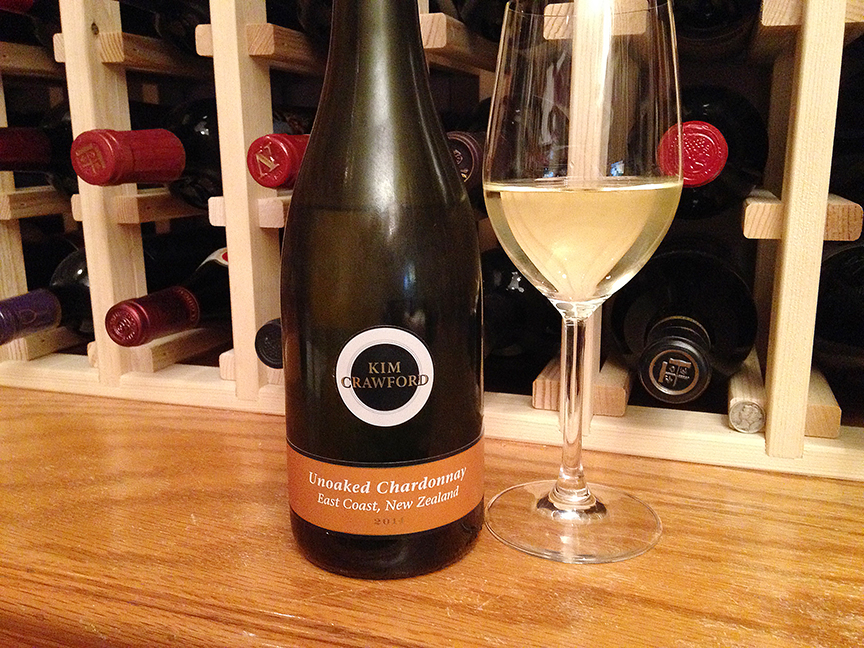
Domaine du Tariquet Côté Chardonnay et Sauvignon 2014
Domaine du Tariquet Côté Chardonnay et Sauvignon 2014: Interesting equal blend of chard and sauv blanc; flowers, spice, grapefruit, citrus, melon, minerals, hint of sweetness; the effort provides fresh, delightful surprises. Magic of the mix is interplay of chard’s rich, buttery, roundness and sauv blanc’s aromatics, zingy freshness and cleansing acidity; chard is fermented in barrel, sauv blanc in stainless steel. Winemaker Yves Grassa often is described as brilliant and innovative, and this distinctive and delicious blend is an example. Chard-sauv blanc blends are made around the world and are more common than many realize, but Grassa’s 50-50 approach is not standard. Enjoy how his effort plays with your palate in evolving ways, and ways you probably have never had your palate played with before. This come’s from Côtes de Gascogne region in southwest France, inland from the Atlantic and north of the Pyrénées, Toulouse is major city to the east. Gascogne (Gascony to the English) is one of France’s leading producers of white wine for export—some 75% of its 100 million-plus bottles each year are sold for export. $11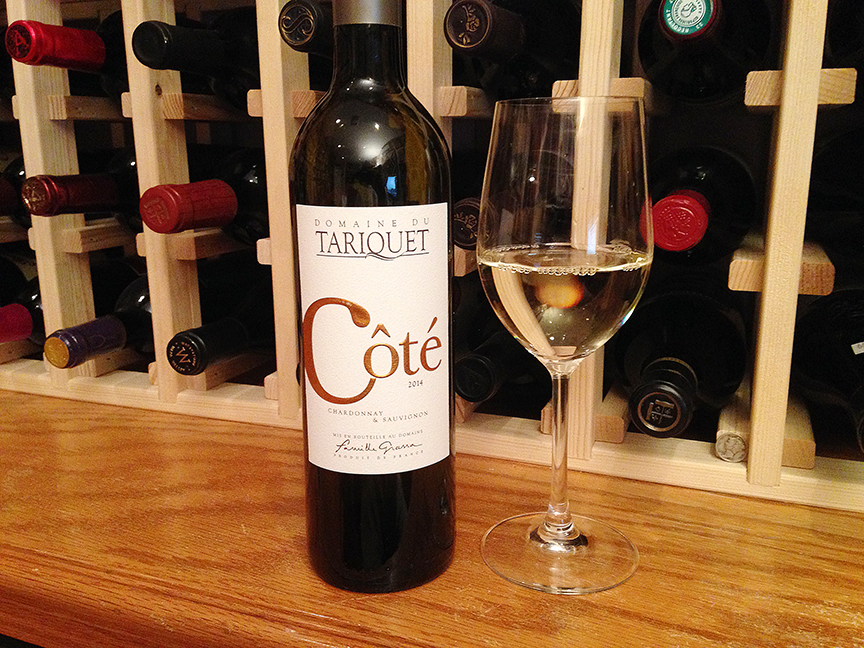
Columbia Winery Composition Red Blend NV
Columbia Winery Composition Red Blend NV: Unlike earlier versions of Composition, where cab led, in this effort syrah dominates (70%), followed by malbec (13%), petit verdot (5%), merlot (3%), mourvedre (3%), and other red varieties (6%). Deep red color; reluctant nose; raspberry, plum, plenty of oak and sweet fruitiness on the palate with some redcurrant tang on the finish; soft tannin and medium acidity, medium-heavy mouth, smooth. Columbia Winery—like Composition Red Blend—has been searching to find itself this century. Founded in 1962 by University of Washington professors, it was the first Washington winery to focus on European wine grapes and first to introduce syrah to the state, so this effort reflects that heritage. The 21st century has not been kind to Columbia, with the winery changing ownership three times since 2001. Now it is a Gallo brand, which should bring stability. Production has been sharply reduced, which should augur for finer efforts. Composition seems aimed at the Apothic/Menage à Trois market, but with less flamboyant fruitiness and oak. A competent effort, as you expect from Gallo. $14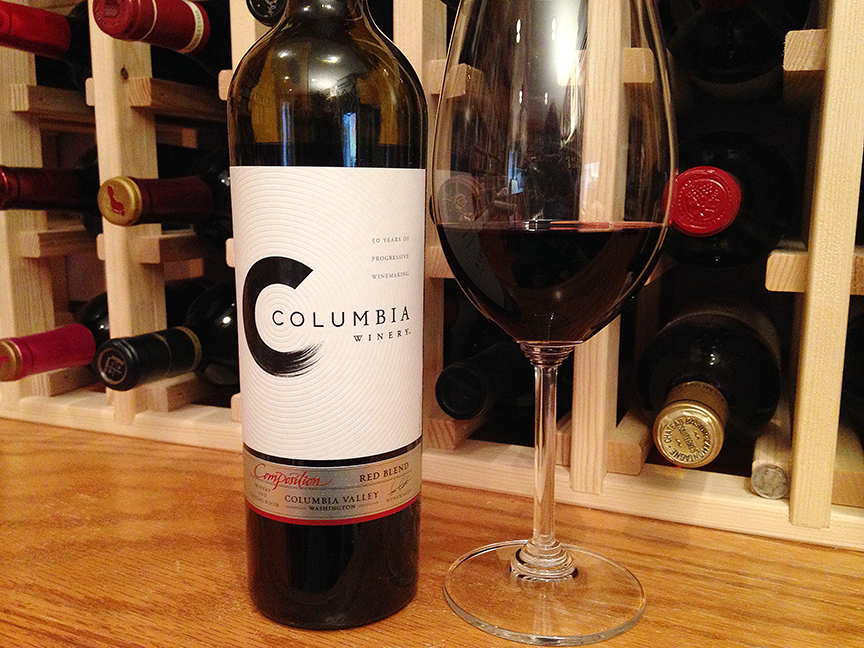
Concannon Vineyard Cabernet Sauvignon Paso Robles
Concannon Vineyard Cabernet Sauvignon Paso Robles AVA 2013: Bright ruby color; rich, earthy, blackcurrant nose; fruit-forward red cherry, black currant tang, plenty of plum and oak, vanilla, spice; meaty, round, smooth, sweet; mild tannin, some acidity. 85% cab, 10% merlot, 5% petite sirah. Concannon’s legacy reaches back to 1883 when James Concannon became first Irish immigrant to successful found a California winery. In 1950, Concannon hired the first female professional winemaker, Katherine Vajda. In 1961, winery introduced petite sirah to the world. Finally, in 1970s, Concannon Clones 7, 8 & 11 became backbone of cab plantings in California’s premier wine regions. Made in fruity-sweet, mild tannin style some red lovers love and others not so much (they want more tannin, acidity, and complexity). Well worth a try to see if it pleasures your palate. $20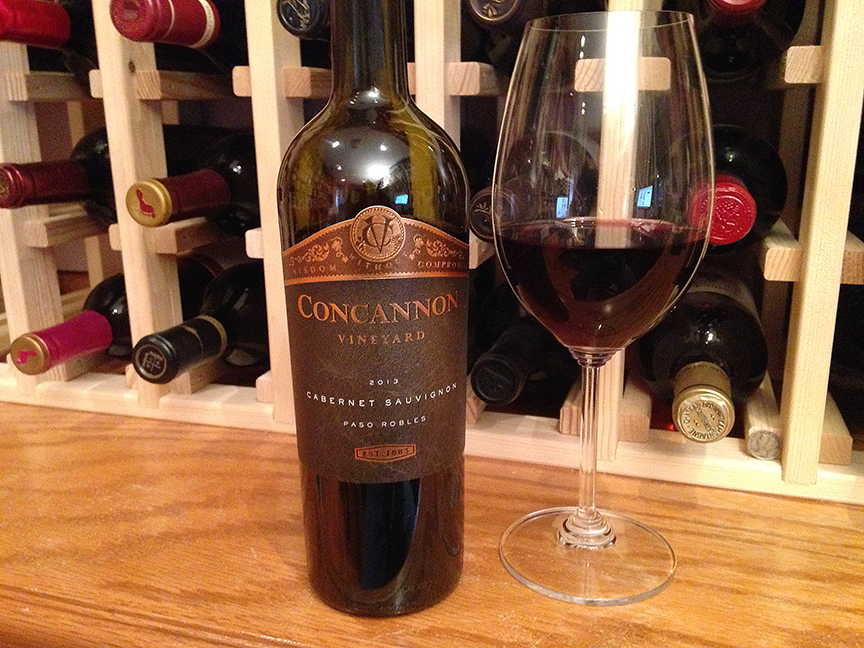
Michael David Freakshow Cabernet Sauvignon 2012
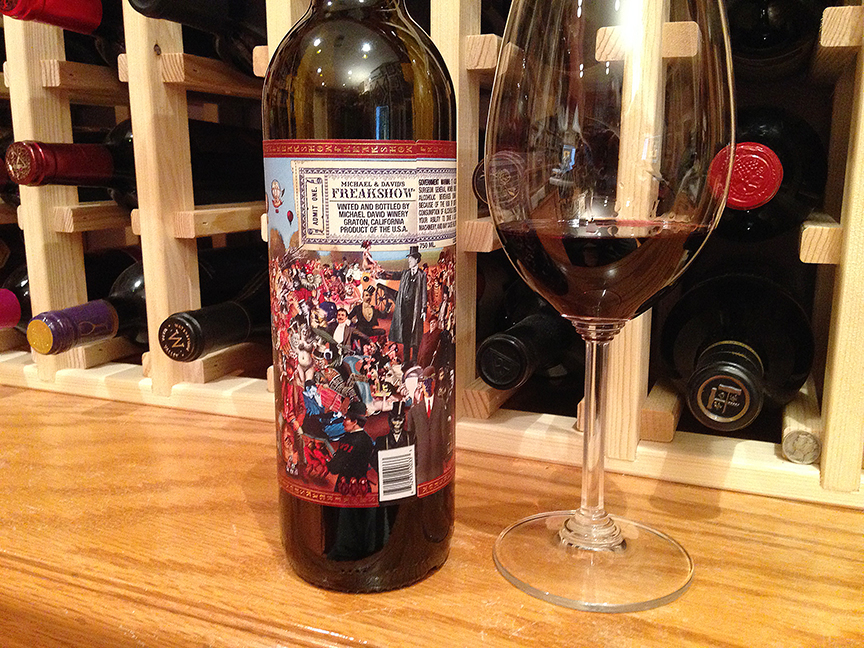
Michael David Freakshow Cabernet Sauvignon 2012. Dark brooding color, big oak, big black fruit, black cherry, blackberry, boysenberry, pomegranate, smoky oak (we did mention oak a second time), vanilla, blackcurrant tang on the finish; robust but smooth with reserved tannin. Michael David wines always seem to put on a good show, and Freakshow may be their showiest—loaded with juicy Lodi fruit and rich flavor plus an over-the-top label (Robert Parker: “one of the best labels in the wine business”) that matches the wine inside. The wine is almost sweet with the oak, but somehow MD gets to the edge of OMG and pulls it off by using French oak (not the stronger American oak). This is the average person’s monster jammy Napa cab, but at a fraction of the price, and from lowly Lodi in the Central Valley. Michael and David Phillips are brothers whose family has farmed in Lodi since the 1850s and has made wine for almost a century. That’s likely reason for aggressively progressive sustainable farming practices; by sixth generation you understand the long haul. All fruit MD has crushed since 2011 was certified sustainable. Freaky good. $19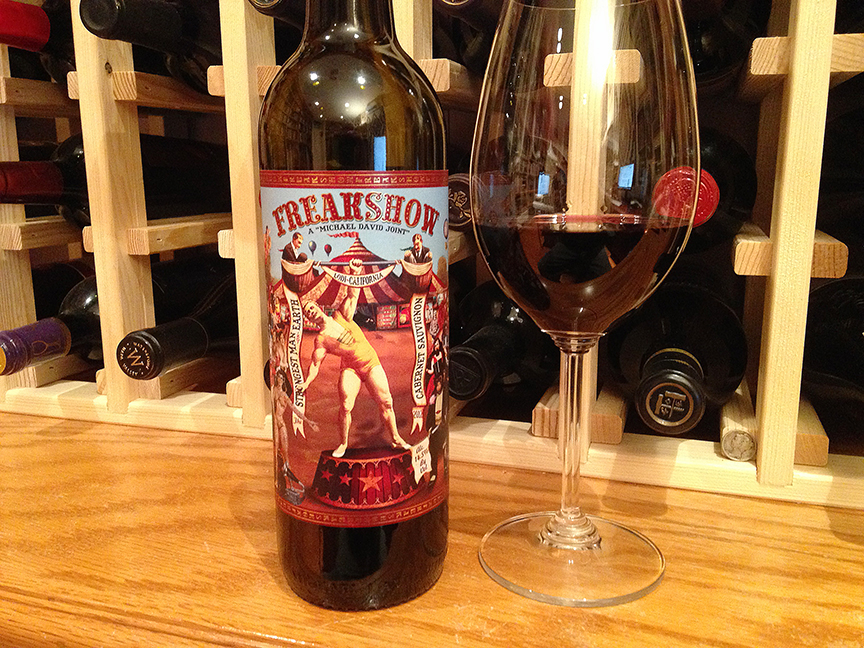
Laurent-Perrier Cuvée Rosé Champagne Brut NV
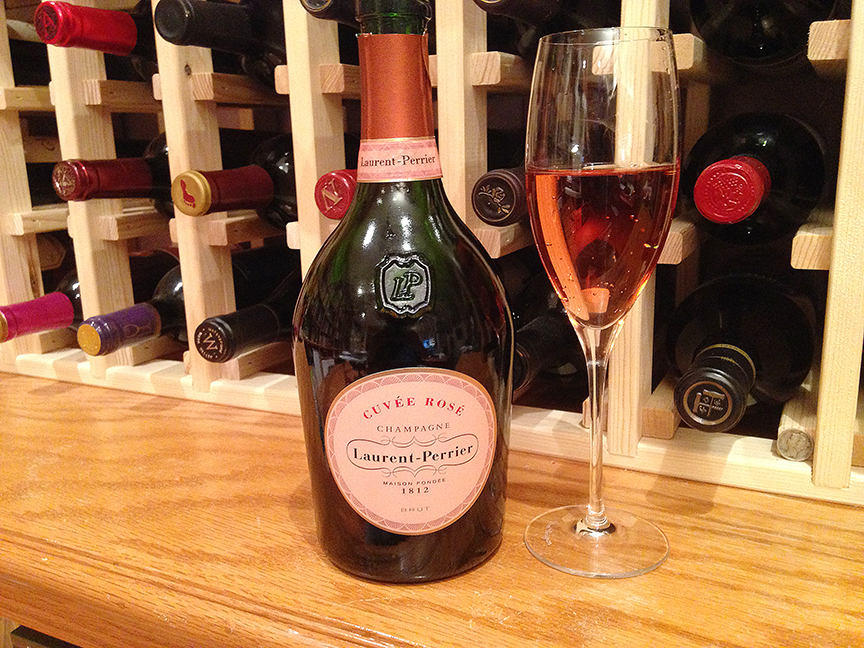
Laurent-Perrier Cuvée Rosé Champagne Brut NV: One of the most famous rosé Champagnes in the world; intense, lovely color that evolves from raspberry into salmon-pink in the glass; strawberry, red fruits on the nose; bright, round on the palate with strawberry, black cherry flavors; tingle of black currant on lingering finish; nice acidity, some minerality, focused, fresh. Comes in iconic, instantly recognizable dumpy bottle. This is 100% pinot noir, mainly from Montagne de Reims (the very heart of the Champagne region), and includes grapes from grand crus of Ambonnay, Bouzy, Louvois, and Tours-sur-Marne. Delicious as aperitif, will pair well with fish, cheeses, and lighter meats, also with red fruit desserts. Clearly this is pour for celebrations year-round, but consider for elegant summer event where wow is an objective. Think, too, as a two-person joy where savoring something exquisite makes the moment special. $77-100
Nicolas Thienpont Chateau La Prade Francs-Côtes de Bordeaux 2010
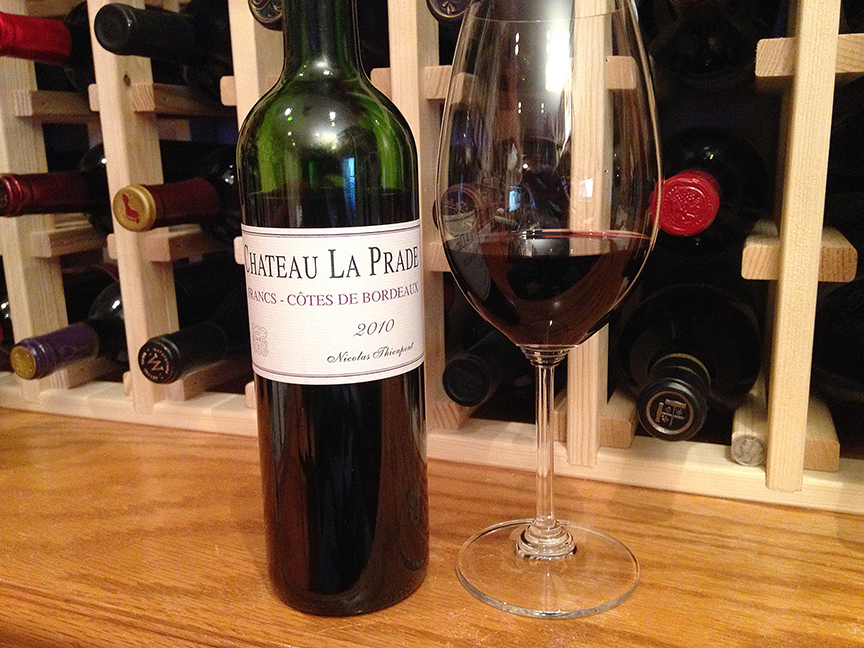
Nicolas Thienpont Chateau La Prade Francs-Côtes de Bordeaux 2010: Deep ruby-crimson color; medium-plus body; opulently fleshy, ripe, bright fruits, plum, red cherry, strawberry, black currant tang. As expected from right-bank Bordeaux, merlot dominates—90% to 10% cab franc; combined the two grapes make an impressively robust red (on left side of the Gironde, merlot and cab franc lend some softness and finesse to cabernet sauvignon). Cotes de Francs is Bordeaux’s smallest AOC appellation and one of the highest in elevation; several critics opine this effort “this is about as good as Cotes de Francs can be.” This is a big wine, but not a raging red monster; tannins are there but do not deliver oppressive puckering; as it relaxes in your glass, some of playful smiles of the ingénue facet of merlot peek from behind the curtain, rewarding you for sticking around after the opening salvos of big, serious wine bluster. Nice value, nice wine. $15-22